New parents

Welcome, and congratulations on your beautiful baby! Whether your baby has just arrived or you've already spent a few months getting to know one another, we're delighted you've found us.

The early days of parenthood can be wonderful, exhausting, joyful and overwhelming, often all at the same time. You may also be navigating appointments, therapies and lots of new information.

Please know that you don’t need to have all the answers. As a parent-led charity, many of us have been where you are today. We’re here to give you practical information, answer your questions and connect you with other families, whenever you need us.

Skip ahead

A good place to start

Many parents tell us that one of the most helpful things they did was hear from families who’ve been where they are now.

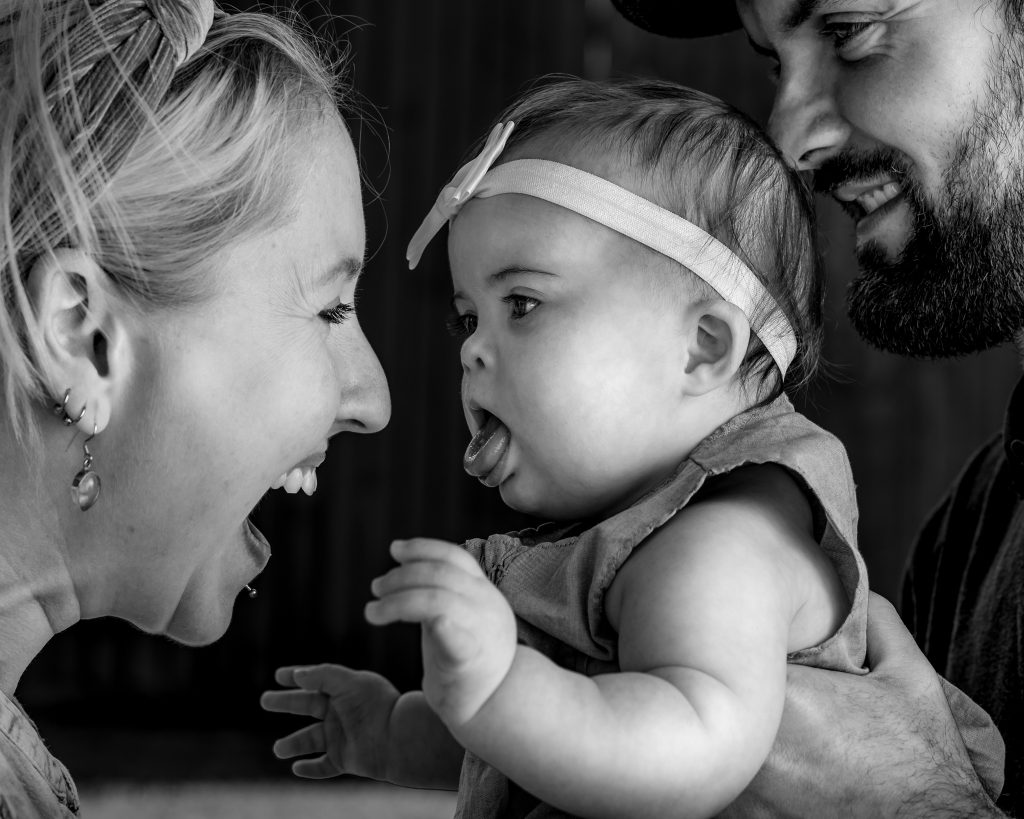
Magdalena Sztechman's black and white photo of a family, mum is facing their child and smiling close to her face while the father holds the child up to her

#NobodyToldMe

Written by people with Down syndrome, parents, siblings, grandparents and friends, it’s the book many of us wish we’d been given when our children were born.

Family with 2 children and 2 parents posing for a picture at the seaside

A glimpse of family life

Watch our short film, which offers a glimpse into family life today.

A cute picture of a baby lying on their siblings front while the sibling is lying on the couch, smiling and looking at the baby

Family stories

Real stories from families who once had the same worries and questions you may have now.

Join the community

One of the best things about being part of Down Syndrome UK is connecting with other families. Our free, private PADS (Positive About Down Syndrome) groups are friendly, welcoming spaces to ask questions, share experiences and celebrate milestones.

New parents group

The heart of our community, for parents of babies up to 18 months, with families who’ve been where you are now. Once you join, a member of our team will send you a welcome message and offer to post you a free new parent care parcel, with thanks to the VINCI UK Foundation.

Dads group

A space for dads, with monthly online sessions to learn the Makaton signs for a children’s book and a WhatsApp group too.

Grandparents group

Support for grandparents, including Makaton courses especially for grandparents.

Heart buddies

If your baby has a heart condition, we can put you in touch with a parent whose child has recently had a similar procedure.

Prefer to meet in person? Find a local support group

Feeding support

Feeding can sometimes feel challenging in the early days, whether you’re breastfeeding, bottle feeding, tube feeding or a combination.

Our feeding resources are full of practical advice, and our breastfeeding and feeding support group offers guidance and encouragement from experienced parents and trained supporters, including our Breastfeeding Supporter, Sarah.

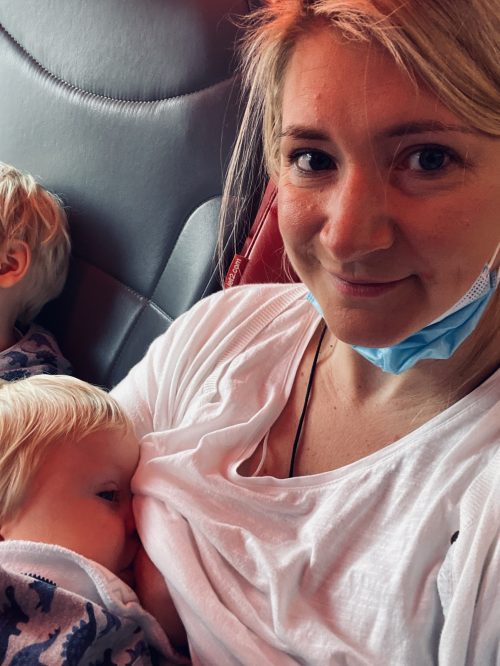
mother breastfeeding her baby with down syndrome

Supporting your baby's development

Babies with Down syndrome learn and develop in their own way, and there is so much you can do to support their progress from the very beginning. We know local services can vary a lot, so we offer specialist support online.

Physical development guide (from the early weeks)

A stage-by-stage physiotherapy guide with everyday activities to support your baby’s movement and physical development.

PEGS early development groups (from around 6 months)

Small groups that build your knowledge, confidence and practical skills to support communication, movement, play and learning through everyday activities at home.

Events and training

Makaton, information sessions and more, for whenever you feel ready.

Your questions answered

Answers to the questions expectant parents ask us most. You don’t need to read them all today and if you had any questions that aren’t listed below, we welcome you to ask in our closed Facebook groups.

SUPPORT FOR YOU

You don’t have to go through this alone. Our private New Parents group is for parents in the UK of a baby with Down syndrome up to 18 months old. It’s a safe space to ask any question, share any worry and celebrate every milestone, with parents who have a wide range of experiences and experts on hand too.

We also fund one-to-one counselling with an experienced, independent counsellor for members of our New Parents group who are finding things particularly hard, and we run small group sessions that parents tell us they find really helpful.

Dads and partners are very welcome in our New Parents group, and there’s also a group just for dads. Some of the dads there struggled in the early days too and understand any worries you may have.

Every month there’s an online session for dads to learn the Makaton signs for a children’s book, so you can sign a bedtime story with your child. There’s a WhatsApp group too; contact us for details.

Take things one step at a time. Our Little Orange Book of Knowledge (also known as “You don’t know what you don’t know”) explains what support your baby can access and when, and you can dip in and out of it as you need.

Our online groups are full of information too. If you can’t find what you need, just ask. We’re only ever a message away.

Many parents in our community are on this journey as lone parents, some by choice and some not. Friends and family matter even more, and parents tell us our community gives them encouragement, support and someone to celebrate every milestone with.

As one parent shared: “The DSUK community provides a wealth of knowledge and support in the early days when I really needed it. There is no judgement, just offers of help and support.”

YOUR BABY'S HEALTH

All babies with Down syndrome should have a heart assessment, including a scan of the heart called an echocardiogram, within the first six weeks. Your baby will also be offered regular checks of things like hearing, eyesight and thyroid as they grow.

The Down Syndrome Medical Interest Group has produced growth charts specifically for babies with Down syndrome. Your health visitor or maternity unit can often give you a copy.

Around half of babies with Down syndrome are born with a heart condition. Most don’t need any treatment. A smaller number (around 15 to 20%) need surgery, which for most babies with Down syndrome is considered routine, and there are specialist centres across the UK.

If your baby does need surgery, our Heart Buddies can put you in touch with a parent who has been through it and can support you before, during and after. You can also read parents’ heart surgery stories or visit our heart page.

Many babies with Down syndrome are breastfed. When we surveyed over 300 parents, most who wanted to breastfeed had done so. As with any baby, for some it was straightforward and for others it took time to establish.

If this is how you’d like to feed your baby, we’re here to help. Read our breastfeeding guide and parents’ breastfeeding stories, or join our feeding support group, where our Breastfeeding Supporter, Sarah, is on hand to chat.

Down syndrome is a naturally occurring genetic difference caused by an extra copy of chromosome 21. It’s also called Trisomy 21. Babies with Down syndrome are born to parents of all ages and backgrounds, all over the world.

People with Down syndrome are more likely to have some common health conditions, and, like everyone, they benefit from advances in healthcare. They’re living longer, healthier lives than ever before.

People with Down syndrome have some level of learning disability. That doesn’t mean they can’t learn; it usually means it takes longer to learn new skills. With the right support, most children reach the usual childhood milestones in their own time. Find out more on our What is Down syndrome? page.

Yes. People with Down syndrome share some physical features, but a child with Down syndrome looks more like their parents and brothers and sisters than like other children with Down syndrome.

As with any newborn, no one can predict how your baby will develop, what their strengths will be or what they may find harder. There are no early signs that show how much support your child will need later on.

Some children have no additional health needs beyond everyday illnesses, while others have more complex needs, and some children also have a diagnosis of autism. Many parents tell us their children have so many qualities and strengths beyond those measured at school.

FAMILY AND FRIENDS

This is very personal, and there’s no right or wrong way. In our experience, family and friends tend to follow your lead, so if you share the news in a positive way, you’re likely to get positive responses. Some parents tell people as and when they see them; others share a post on social media. Do what feels right for you.

For ideas and words that worked for other families, read Sharing the news: real parent tips.

Many parents worry about this, and research is reassuring. In a large study of 822 brothers and sisters, more than 96% said they felt affection for their sibling with Down syndrome and 94% of older siblings said they felt proud of them. You can read stories written by siblings and grandparents in #NobodyToldMe.

Source: Skotko, Levine and Goldstein, American Journal of Medical Genetics, 2011.

We support the whole family. Our grandparents group is for grandparents at every stage, and we run Makaton courses especially for grandparents so they can learn to sign too. Find out more on our grandparents page.

You’re already being a good friend by reading this. Congratulate them, because a new baby is something to celebrate, and carry on as you would anyway: ask questions, take an interest, and enjoy the newborn cuddles if they’re happy for you to.

  • Acknowledge that your friend may be feeling worried, especially as there’s still a lot of outdated information around.
  • Let them know about our New Parents group.
  • Hear from people with Down syndrome on our self-advocates page.

Most of all, let them know they’re not alone. They’ve got you, and they’ve got us.

LOOKING AHEAD

From our experience, it’s a mix of emotions with an overwhelming dollop of pride! Parenting any child brings ups and downs, and parenting a child with Down syndrome is the same. Many parents tell us they celebrate milestones even more, because they know how hard their child has worked to reach them.

In a large study of 2,044 parents, 99% said they love their child with Down syndrome, 97% said they are proud of them and 79% said their outlook on life is more positive because of them.

Where there are frustrations, parents tell us they’re mostly about systems and services, not their child. Things are changing for the better: we were proud to be closely involved in the Down Syndrome Act 2022 in England.

Source: Skotko, Levine and Goldstein, American Journal of Medical Genetics, 2011.

Support varies from child to child and across the country. Where local services are limited, we can help:

There’s no need to know it all now.

More and more children with Down syndrome go to their local mainstream school, and others thrive in special schools. Your child should be able to get support throughout their education, set out in a legal plan. In England this is an Education, Health and Care Plan (EHCP). This is a way off yet, but we’re here to help when the time comes.

PRACTICAL HELP

Most parents tell us they haven’t needed anything special, and equipment from older children or relatives is usually fine.

  • A few babies, especially those with low muscle tone or who need oxygen, need a car seat that lies flatter. Parents recommend the Cybex Cloud Z or the Joie i-Level Recline.
  • Many parents love the Shnuggle bath, designed by parents of a child with Down syndrome.
  • As your baby grows, a more supportive high chair can help. Some local authorities provide specialist seating, so it’s worth asking.
  • Our Recommended resources list has books, toys and equipment other families have found helpful.

Yes, families of children with Down syndrome are usually entitled to some financial support. Disability Living Allowance (DLA) can be paid from when your baby is three months old, for children who need much more care than other children of the same age. You may then be able to claim Carer’s Allowance, and Universal Credit may increase.

If your baby needs neonatal care, you may also be entitled to extra leave and pay. Read our neonatal leave and pay guide, and see Contact for clear information on benefits.

There’s a network of local support groups across the UK, alongside our online groups. Many families make lifelong friends this way.

Nicola Enoch, CEO of Down Syndrome UK posing in a picture with her son Tom

A note from Nicola, our founder

“My son Tom is a young adult. He makes my heart burst with pride every single day and has brought far more joy, laughter and adventure to our family than I could ever have imagined.

Like every young adult, he has his own interests, strengths, challenges and ambitions. Life hasn’t always followed the path I imagined when he was born, but it has been a wonderful journey.

Every child with Down syndrome is unique, and every family’s journey is different. We’re here whenever you’re ready.”

Nicola Enoch / Founder and CEO, Down Syndrome UK

Watch Nicola's TEDx Talk

Nicola talks honestly about the outdated information she was given before Tom was born, and why every family deserves balanced, up-to-date information about Down syndrome.

Guides and resources

Practical guides and real stories from other families, to read whenever you’re ready.

Little Orange Book of Knowledge

What support your baby can access and when, to dip in and out of as you need.

Heart surgery stories

Parents share their experiences of their baby’s heart surgery, from diagnosis to coming home.

Physiotherapy and your baby

Families share how early physiotherapy has helped their baby’s development.

NG tube feeding: parents' stories

Real experiences and tips from parents whose babies have been tube fed.

Neonatal leave and pay

Key information on your rights to leave and pay if your baby needs neonatal care.

Recommended resources

Books, toys and equipment that families in our community recommend.

We’re only ever a message away

If you have questions or would like to talk, we’re here.