
- by Donna Murphy BSc(Hons) Physiotherapy HCPC
Small, everyday adjustments can make a huge difference. In this blog specialist physiotherapist Donna Murphy, shares practical, classroom‑friendly strategies to help you feel confident supporting motor skills throughout the school day.
Why physical development matters
The genes provide a blueprint for the brain, but the environment carries out the construction.
Strong motor skills underpin so much of what pupils do in school. Crawling, sitting, standing, walking, climbing, throwing and catching – all these skills help build the foundations for attention, handwriting, communication and independence.
For many pupils with Down syndrome, low muscle tone or hypermobility can make these skills more effortful. But with the right support, pupils can strengthen their bodies, develop confidence and take part fully in the classroom.
Here are some simple ways to build motor skills throughout the school day.
Bring crawling back
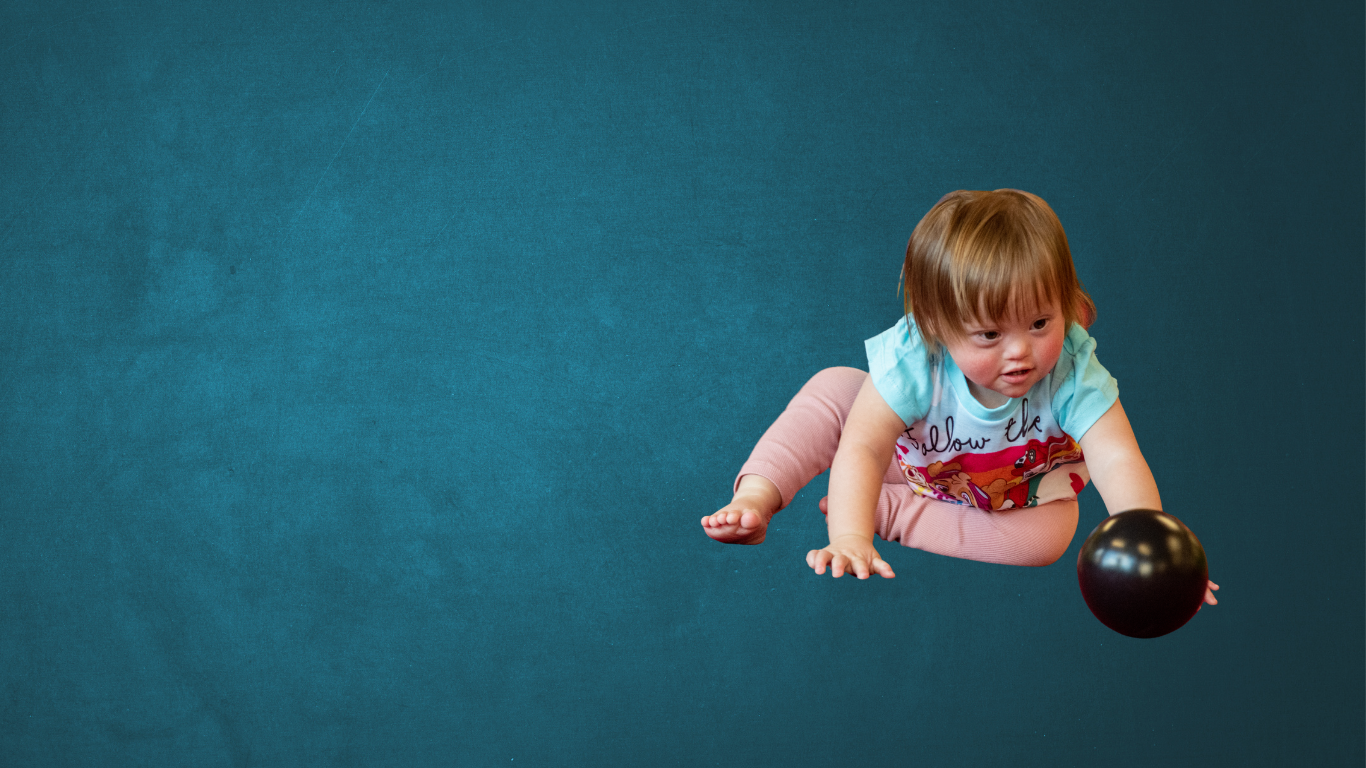
Crawling is described as a ‘golden milestone’ because it strengthens the shoulders, core, hips and hands, as well as supporting binocular vision and coordination. Even for pupils who are already walking, returning to crawling activities can be hugely beneficial. Try using:
- Crawl tunnels or obstacle courses.
- ‘Move like an animal’ games.
- Mirrors for motivation and interaction.
Support strong sitting
Good sitting posture helps pupils focus and use their hands effectively. Low tone or hypermobility can make this tricky, so these small adjustments can help:
- Aim for a 90/90/90 position (hips, knees, ankles) with feet supported.
- Use armrests or foot blocks if needed.
- Encourage side‑sitting during floor time to build hip and trunk strength.
Build strength through everyday movement
Motor skills develop through repetition and variety. You can weave strength‑building into learning without adding extra workload, such as:
- Sit‑to‑stand repetitions – a ‘gold standard’ exercise.
- Reaching for resources placed slightly higher or lower.
- Standing activities for colouring, sorting or matching.
- Controlled squats when picking up items.
Use sensory pathways and movement breaks
It is not realistic for a pupil with Down syndrome to sit as much and for as long as a typical child sits. So, in the classroom, it is important to incorporate movement breaks and stimulate sensory pathways to help with regulation, attention and engagement. Find what motivates the pupil and build on it. Ideas include:
- Simple games like Head, Shoulders, Knees and Toes or Simon Says.
- Short bursts of jumping, rocking or swinging.
- Changing up the environment for variety such as taking the task outside.
Strengthen balance and coordination
Balance reactions develop through practice and variety. Any unstable surface is great for challenging balance and building strength, or you can try:
- Stepping in and out of hoops or boxes.
- Side‑stepping along a line or low step.
- Tandem walking between two taped lines.
- Kicking a balloon (great for single‑leg stance).
You can add in counting and timing to further engage the pupil.
Adapt the environment for early walkers
If a pupil is not yet walking independently, you can still support progress by:
- Providing sturdy furniture for cruising.
- Offering tasks in standing to build endurance.
- Using push toys.
- Creating short ‘between supports’ routes.
Bringing it all together
Supporting physical development is about noticing what each pupil needs, offering small opportunities for movement, and celebrating progress. With thoughtful routines and playful activities, you can help pupils grow stronger, more confident and ready for learning.
Want more practical ideas and ongoing support?
Our Primary Education Programme offers training, information and ongoing support to help you feel confident meeting the needs of pupils with Down syndrome. Sign up today to access more resources, guidance and classroom‑ready strategies.

Share this post
Facebook
Twitter
WhatsApp
LinkedIn
Email
Author

Donna Murphy is a physiotherapist with 25 years of experience and a mum to a child with Down syndrome. Bringing both lived experience and specialist insight into her work, Donna champions the importance of early movement for babies and young children with Down syndrome.
View all posts