









EHCP Support Service

Getting the right educational support for your child with Down syndrome can feel overwhelming, but an Education Health and Care Plan (EHCP) is a powerful tool that can transform your child’s educational experience.

Where are you now?

Our free EHCP Support Service helps parents and carers of children with Down syndrome at every stage of an Education, Health and Care Plan, from knowing when to apply to checking the draft. It includes one-to-one calls, drop-in sessions, draft EHCP checks and online groups for families starting school in the same year.

What is an EHCP?

An Education Health and Care Plan (EHCP) is a legal document that describes your child’s special educational needs and the support they must receive. For children with Down syndrome, an EHCP is often essential because it:

  • Specifies what extra help your child needs in school above and beyond what the other children need
  • Is legally binding, so that the extra provision specified must be provided
  • Provides legal protection for your child’s educational rights
  • Helps schools understand your child’s unique needs and what support is needed at school
  • Covers education, health, and social care requirements

The reality is that most children with Down syndrome will need more support.

An EHCP will ensure that once your child is in school, that the LA contributes towards any extra costs of the provision (training the child needs or training that the school needs to support your child).

Get help from our EHCP Support Service

  • Online support groups
  • 1:1 SEND support calls and drop-in sessions with our EHCP Supporter, Justine
  • EHCP detailed draft checking service
  • Expert guidance from Down syndrome specialists

When should I apply for an EHCP?

Critical timing advice: Apply for an EHCP assessment approximately a year before your child starts school (ideally late spring / early summer).

This gives you time to:

  • Ensure that your child is referred to the professionals that you require reports from
  • Navigate the 20-week legal process (which includes having assessments carried out)
  • Name your preferred school placement
  • Liaise with your chosen school so that they can recruit staff and think about training and transition
  • Avoid delays with securing support that could affect your child’s school start date

Important: Look to apply at the latest within a few weeks of your child turning 3, ideally between the age of 2 and 3.5.
Never apply for an EHCP assessment after the first week of July, as schools and nurseries will be closed for summer holidays, making it impossible to gather required information.

Before you apply: professionals to involve

Getting the right professionals involved: The EHCP process relies heavily on professional reports.

If you don’t have the right professionals providing input, your EHCP will have gaps.

Here’s who you need to consider involving before starting the process:

Ask your GP to refer you now

Waiting lists can be months long, so start these referrals early through your GP or local NHS service.

  • Speech and language therapy (SaLT)

    Most children with Down syndrome benefit from SaLT, even if their speech seems good. A therapist can advise on communication, listening, attention and concentration at school.

  • Occupational therapy (OT)

    Advises on seating, tables, writing tools, eating, drinking, dressing, toileting and sensory needs.

  • Physiotherapy

    Records low muscle tone (hypotonia) and flexible joints (hypermobility). If your child is not yet standing or walking on their own, a physio can suggest exercises and equipment.

  • Orthoptist

    Children with Down syndrome often have reduced sharpness of vision. A referral to your local NHS eye care team means changes can be made to support learning.

Your local authority will arrange

These professionals are involved as part of the EHCP needs assessment.

  • Paediatrician

    Gives an overview of your child's health and records any medical conditions that affect learning, for the health sections of the EHCP.

  • Educational psychologist

    Assesses how your child learns and recommends teaching approaches.

  • Hearing support team

    If your child has hearing loss, they advise on where your child sits in class and other changes, train staff to look after hearing equipment, and practise hearing tests with your child.

  • Vision support team

    If your child wears glasses or has a vision condition, they advise on font size, colour contrast and the classroom, practise vision tests with your child, and may refer to a habilitation team to assess the school.

Additional Specialists to Consider:

  • Audiology – Hearing issues are common in children with Down syndrome
  • Orthoptist/Ophthalmology – Many children with Down syndrome have vision acuity and other conditions 
  • Down Syndrome Education Expert – Someone from a local Down syndrome education group with specific approaches like See and Learn or Numicon
  • Incontinence Team – usually from the age of 4 or 5 if required
  • Cardiology – If heart conditions are present
  • Orthotics
  • Wheelchair services
  • Ear, Nose and Throat (ENT)
  • Sleep consultant
  • Dietician/Feeding Expert

The EHCP process, week by week

Start referrals early – you need to do this via your GP or local NHS service. Find out waiting times for each service, as some may take months to arrange appointments.

  1. Week 0: make your request

    You have the legal right to ask your local authority (LA) for an EHC needs assessment. Your child's nursery or school can also ask, but making the request yourself means you know the exact start date.

    • Check your LA's Local Offer website for forms and where to send your request
    • Write to your LA's Director of Children's Services and keep a copy
    • Send as many reports and as much information as you can
    • Consider adding your own notes, such as a weekly diary, a month of appointments, or a "day in the life" of everything you help your child with
  2. Week 1: acknowledgement

    The LA should confirm it has received your request. If you haven't heard within a couple of weeks, follow up to check it arrived.

    Over the next few weeks, the LA gathers early information from the professionals who know your child.

  3. Week 6: decision to assess

    By week 6, the LA must tell you whether it will carry out a full assessment. This is based on early information from professionals and your child's nursery or school.

    What to do now:

    • Email the LA with contact details for every professional involved
    • Send any recent reports you have
    • Ask the LA to seek information from all the relevant professionals
    • Mention any referrals that are still outstanding
  4. Weeks 6 to 12: the assessment

    You'll be asked to write Section A of the EHCP: your family's views and your child's hopes for the future. This may happen at a meeting with the LA.

    • Write fully, and don't be limited by the size of the boxes
    • Describe your family and your child's important relationships
    • Include your child's strengths and interests, as well as areas of concern
    • Cover feeding, sleeping, mobility, safety and toileting
    • Add long-term hopes, such as learning to the highest level possible, meaningful work, living independently, managing money, friendships and being part of a community

    These hopes matter most, because they set what the EHCP is working towards.

  5. Weeks 12 to 13: professional reports due

    All professional reports should be completed by now. If you know one is late, let the LA know and ask them to chase it.

  6. Week 14: draft EHCP

    If the LA agrees to issue a plan, you should receive a draft EHCP with all the professional reports included. Check it carefully and chase any reports that are missing.

    Make a note of the date on the draft. Your 15 days to respond start from that date.

  7. Act quickly

    Within 15 days of the draft: respond

    You have at least 15 days from the date on the draft to respond. Keep the envelope with the postmark. Within those 15 days you can:

    • Tell the LA you need longer, and ask them not to finalise the plan on day 15
    • Ask for a meeting with the LA to discuss changes (book one about two weeks ahead; you can always cancel)
    • Give the LA your school preferences
    • Request changes to the draft and ask for a personal budget

    Template email to protect your rights:

    Dear Case Officer,
    
    Thank you for sending the draft EHCP for my child [name, date of birth].
    
    I am seeking advice and will be making parental representations shortly.
    
    I would like:
    1. For the local authority not to finalise the EHCP on day 15, pending my parental representations, in line with SEND Code of Practice 9.77.
    2. To request a meeting with the local authority to discuss the proposed changes.
    
    Please let me know your available dates after the 15-day period.
    
    Yours faithfully,
    [Your name]
    Book a draft EHCP check
  8. Week 16: decision and school consultation

    If the LA has decided not to issue a plan, it must tell you by now.

    Otherwise, the LA sends consultation papers to the schools you've named, and they have 15 days to reply. Around week 18, check the replies are back and ask for copies.

  9. Week 20: final EHCP

    The EHCP is finalised and you'll receive a copy (without the reports). Check that the support set out in the plan is what was agreed.

When the draft arrives

  • Book a 1:1 SEND support call with our EHCP Supporter, Justine
  • You have the right to mediation and appeal for the assessment being refused
  • Get the refusal in writing
  • Seek advice from your local Information Advice and Support Service
  • Consider what additional evidence might be needed
  • Book an EHCP draft check via DSUK
  • Make detailed representations highlighting gaps
  • Request a meeting with the LA
  • Seek independent advice
  • Avoid private reports initially – see what the LA provides first
  • Time private reports carefully – they must be current for any tribunal
  • Consider long-term maintenance – how will private therapy continue?
  • School placement comes first – do not appeal until you have a school place. You may not get a school place named if you appeal beforehand.

After the EHCP

  • If your child was born between April 1st and August 31st, they can start school a year later. 
  • It is your choice which year your child starts school in.
  • Ideally you need agreement for a summer born Reception start at compulsory school age before starting the EHCP process.

Children under compulsory school age can attend part-time. 

Join a Facebook group

Join one of our free Facebook groups for the year your child starts, or started, school. Each group brings together families going through the EHCP process at the same time, and the groups stay open after your child starts school, so you can join at any stage.

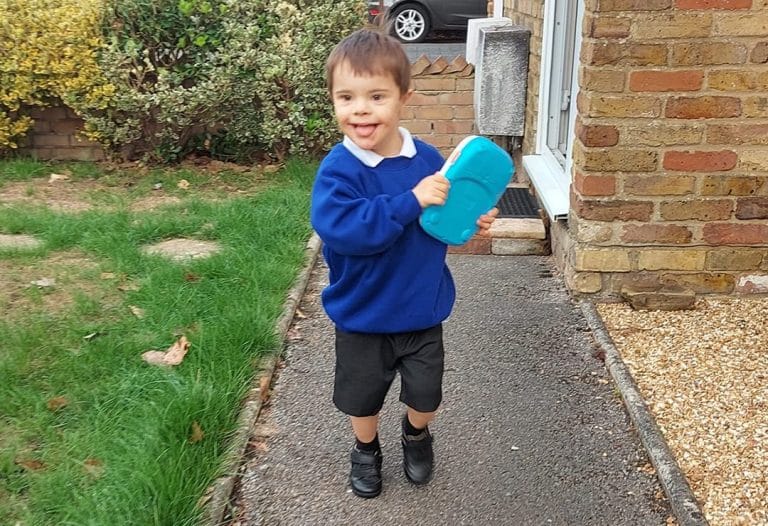
Little boy with Down syndrome playing outside

Free EHCP guides to download

Print them, keep them with your paperwork, or take them to meetings with your local authority.

PDF guide · 3 pages

What should be in your child's EHCP?

A section-by-section guide to the plan, with examples written for children with Down syndrome. It explains why Section F, the support your child must receive, matters most and how to make sure it is specific.

  • A: views and hopes
  • B: educational needs
  • C: health needs
  • D: social care needs
  • E: outcomes
  • F: provision (most important)
  • G and H: health and care provision
  • I: school
Download resource (PDF)

PDF guide · 2 pages

EHCP step-by-step timeline

The assessment process in one printable guide, including what to send at each stage and a template email for responding to your draft plan.

Download resource (PDF)

Printable tracker · 1 page

EHCP timeline tracker

A one-page table to note when each step is due and when it happened, so you can spot delays early and chase them.

Download resource (PDF)

Next steps

If you’re ready to start the EHCP process for your child with Down syndrome:

  1. Contact your GP to discuss referrals to essential professionals
  2. Visit your LA’s Local Offer website to understand their specific processes and how to apply for a needs assessment
  3. Join Down Syndrome UK’s EHCP Support Service for expert guidance
  4. Start documenting your child’s needs and gathering existing reports
  5. Research potential schools in your area

An EHCP can be transformative for your child’s education, providing the legal framework for them to receive the support they need to thrive. While the process can seem daunting, with proper preparation and support, you can secure an EHCP that truly serves your child’s best interests.

Remember: You are your child’s best advocate. Trust your instincts, ask questions, and don’t be afraid to push for what your child needs. Every child with Down syndrome deserves the opportunity to reach their full potential, and an EHCP is often the key to making that happen.

For more support with your EHCP journey, contact us at info@downsyndromeuk.co.uk or join our EHCP Support Service for expert guidance tailored to families with children with Down Syndrome.