
- by Dr Rebecca Baxter
Many pupils with Down syndrome find early numeracy particularly challenging. There are number of factors that influence number development which include speech and language delays, working‑memory difficulties, motor skills and challenges with sequencing and abstract concepts.
Pupils with Down syndrome often have relative strengths with visual memory and benefit from repetition with familiar resources and strategies.
Here are some the key areas that influence numeracy and the strategies teaching staff can use to support the pupil’s progress in numeracy.
Vocabulary and language
Maths uses lots of tricky words and concepts that may be unfamiliar to pupils with Down syndrome. For example, if we just think about addition, vocabulary could include a number of terms e.g.
- add
- addition
- plus
- together
- more than
- biggest
- most
- how many
- altogether
Understanding these concepts and terms (or at least some of them) is essential before pupils can use them confidently. Helpful approaches include:
- Teaching new vocabulary explicitly.
- Using visuals to show meaning.
- Repeating key words consistently.
- Pairing spoken words with written numerals and symbols.
- Choosing vocabulary and using it consistently – if using multiple terms (e.g., add, addition, plus), remember these will all need to be learnt.
Working memory and attention
Holding verbal information in mind can be difficult for pupils with Down syndrome, especially during multi‑step tasks. You can reduce the load by:
- Using number lines, written instructions, and visual prompts.
- Keeping steps short and predictable.
- Labelling sets once counted.
- Using concrete–pictorial–abstract (CPA) approaches.
Counting skills
Children may know the number sequence but struggle with counting principles such as rote counting, one‑to‑one correspondence or cardinality. Ways to support this include:
- Practising counting with real objects and using supports for counting.
- Encouraging children to move, mark off or write the numbers on items as they count them.
- Ensuring understanding or cardinality by asking “How many altogether?” after counting (and knowing the difference between ‘counting’ and ‘how many’).
- Using consistent strategies and resources to build confidence.
Number representation and quantity
Linking numerals to real quantities can take time and pupils with Down syndrome often need more support with this. Activities that can help include:
- Matching numerals to sets of objects.
- Comparing quantities (“Which has more?”)
- Using visual patterns like dice or ten‑frames that visually show quantities.
- Visually showing quantities and linking to the numeral i.e. linking 27 has two tens (20) and seven ones (7).
Early calculations
Pupils with Down syndrome often benefit from strategies and resources that reduce the demands on the number skills that are particularly challenging for this group e.g., rote counting and 1:1 correspondence. Use the same strategies and resources to support new areas of number and support generalisation such as:
- Using the same resources used across all number activities – when one resource is mastered, a new resource can be introduced.
- Learning number facts and how to use them (or where to find them e.g., a times table square, a maths dictionary).
- Working through the concrete-pictorial-abstract approach with new calculations/challenges.
- Encouraging structured methods that reduce reliance on memory.
Understanding money and time
Real‑life practice is essential to understanding the concepts of time and money. To support learning use:
- Real coins when learning coins and values – linking to familiar resources.
- Timers, visual timetables, and calendars.
- Familiar daily events to anchor time concepts.
- Important times throughout the day – have them on the desk or visual timetable and look out for them on the clock/watch.
Bringing it all together in the classroom
Incorporating small‑steps and repetition into everyday teaching works best. Keep targets specific, achievable, and tailored to each pupil. Celebrate progress, however small, and revisit skills regularly to support revision and long‑term understanding.
A final word
With the right strategies pupils with Down syndrome can make meaningful, confident progress in numeracy. By combining visual supports with clear language, resources and structured repetition, you can help pupils to build the foundations they need.
For more practical strategies, sign up to our Primary Education Programme today and start accessing expert-led training and ongoing support.
Share this post
Facebook
Twitter
WhatsApp
LinkedIn
Email
Author
 Director of Education and Speech and Language TherapyView all posts
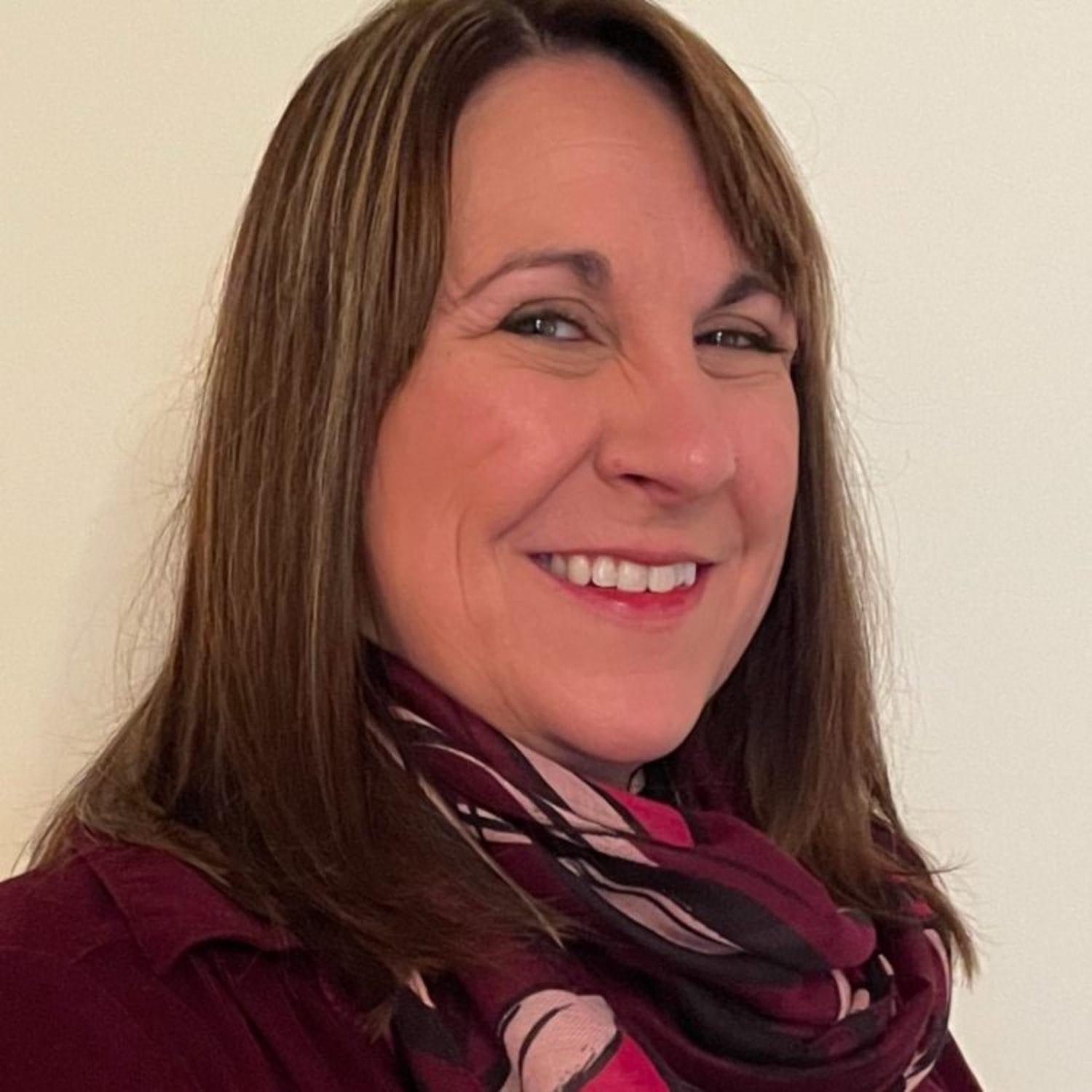
Dr. Rebecca Baxter as our Director of Education and Speech and Language Therapy. Becky is a speech and language therapist who specialises in Down syndrome and has worked with babies through to young adults with Down syndrome. Becky is also involved in a number of research projects across speech, language and education issues associated with Down syndrome. Becky completed her PhD in 2023 at University College London, which involved developing and evaluating a language intervention for children with Down syndrome. Becky is passionate about supporting speech and language therapists and is currently chair of the Down Syndrome Clinical Excellence Network. She has delivered training to speech and language therapists across the UK and internationally.